
Reversing the Rise of Suicide in Correctional Facilities
How Touchless Monitoring Technology Can Help Save Lives
Suicide remains one of the most urgent—and preventable—crises facing U.S. correctional facilities. Despite increased awareness and policy reforms, suicide rates among incarcerated individuals continue to rise, placing immense emotional, operational, and legal strain on correctional agencies nationwide.
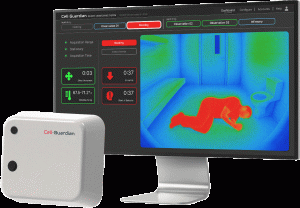
At Technology West, we work with public safety partners to evaluate emerging technologies that strengthen safety while respecting privacy and operational realities. One such solution is Cell-Guardian, a touchless inmate monitoring platform designed to support early detection and rapid response in high-risk environments.
The Alarming Rise of Suicide in U.S. Jails and Prisons
Suicide is now one of the leading causes of death in correctional facilities. Beyond the tragic loss of life, these incidents deeply affect correctional officers, medical staff, fellow inmates, and families—often leaving long-lasting psychological and professional impacts.
According to data published by the Bureau of Justice Statistics:
-
Suicide deaths increased 85% in state prisons, 61% in federal prisons, and 13% in local jails between 2001 and 2019
-
Suffocation (including hanging and self-strangulation) accounted for nearly 90% of suicide deaths in local jails
-
Approximately 12% of jail suicides occurred within the first 24 hours of incarceration
-
Suicide rates among white inmates were five times higher than Black inmates and more than three times higher than Hispanic inmates
It is important to note that correctional suicide data often lags by several years, making it difficult for agencies to fully understand current risk levels or measure the effectiveness of interventions in real time.
Why Suicide Risk Is Elevated in Correctional Settings
Incarceration is a profoundly disruptive and stressful life event. Research shows that suicide rates within correctional facilities far exceed those of the general population, particularly during early confinement.
Key contributing factors include:
Environmental Stress
Isolation, loss of autonomy, institutional discipline, and separation from family and community can significantly increase feelings of hopelessness—especially during intake and pretrial detention.
Mental Health and Substance Use Disorders
Many individuals enter custody with preexisting mental health conditions or substance use disorders. Disrupted treatment, unfamiliar surroundings, and limited support systems can rapidly exacerbate these conditions.
Demographic and Behavioral Risk Factors
Men are significantly more likely to die by suicide than women in correctional settings. Individuals facing serious or violent charges may experience acute emotional distress as they confront long-term consequences.
Inadequate Mental Health Resources
Staffing shortages and limited access to behavioral health professionals can delay assessments and interventions for at-risk inmates.
Solitary Confinement and Single-Cell Housing
Isolation practices—though sometimes operationally necessary—are strongly correlated with increased suicide risk due to reduced human interaction and oversight.
The Human and Organizational Toll of Suicide
The impact of suicide extends far beyond the individual. Correctional officers, healthcare providers, clergy, volunteers, and program facilitators often carry lasting trauma after an incident—especially those who respond to or witness the aftermath.
Facilities may also face:
-
Increased staff burnout and turnover
-
Internal investigations and morale challenges
-
Heightened legal exposure and public scrutiny
Preventing suicide is not only a moral imperative—it is a critical operational responsibility.
How Touchless Monitoring Technology Can Help
Traditional inmate monitoring methods—such as periodic rounds or fixed camera views—leave dangerous gaps between checks. Touchless monitoring technology offers a complementary layer of continuous oversight without requiring wearables or invasive surveillance.
Cell-Guardian is a zero-touch inmate monitoring system designed to detect early warning signs of distress and enable faster intervention.
Key Capabilities Include:
-
Continuous, Touchless Monitoring
Uses thermal imaging and sensor technology to observe inmate presence and movement without physical contact. -
Real-Time Alerts
Automatically notifies staff of abnormal activity, prolonged inactivity, or sudden movement changes that may indicate medical distress or self-harm risk. -
AI-Driven Pattern Analysis
Aggregates behavioral data over time to help identify trends and inform preventive strategies. -
Time-Stamped Video Documentation
Associates alerts with synchronized video and sensor data to support accountability, investigations, and legal protection. -
Operational Compatibility
Designed to integrate into existing correctional workflows and infrastructure with minimal disruption.
By supporting early detection and rapid response, touchless monitoring can help reduce reliance on reactive measures and provide staff with actionable insight when it matters most.
echnology as Part of a Broader Prevention Strategy
Technology alone cannot solve the suicide crisis in correctional facilities. Meaningful progress requires a layered approach that includes:
-
Expanded mental health services
-
Staff training and wellness support
-
Clear intake and risk assessment protocols
-
Policies that minimize unnecessary isolation
When combined with compassionate care and informed policy, touchless monitoring technology can play a powerful role in protecting lives.
Moving Forward
Reducing suicide in correctional facilities demands both urgency and innovation. By pairing modern monitoring tools with comprehensive mental health strategies, agencies can better safeguard inmates, support staff, and reduce preventable tragedies.
To learn more about touchless inmate monitoring solutions and how they fit into a modern correctional safety strategy, visit Technology West’s Cell-Guardian solution page.